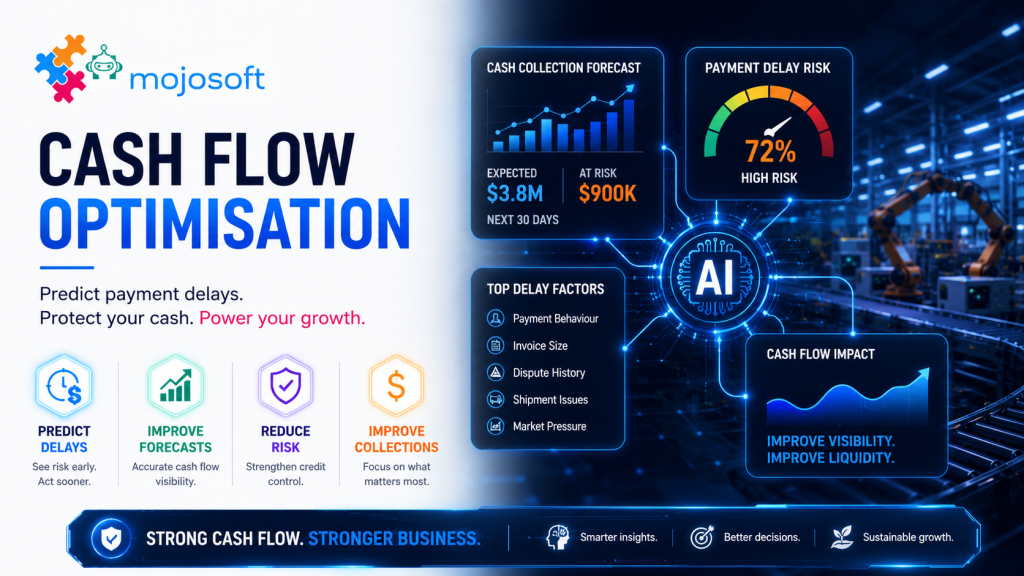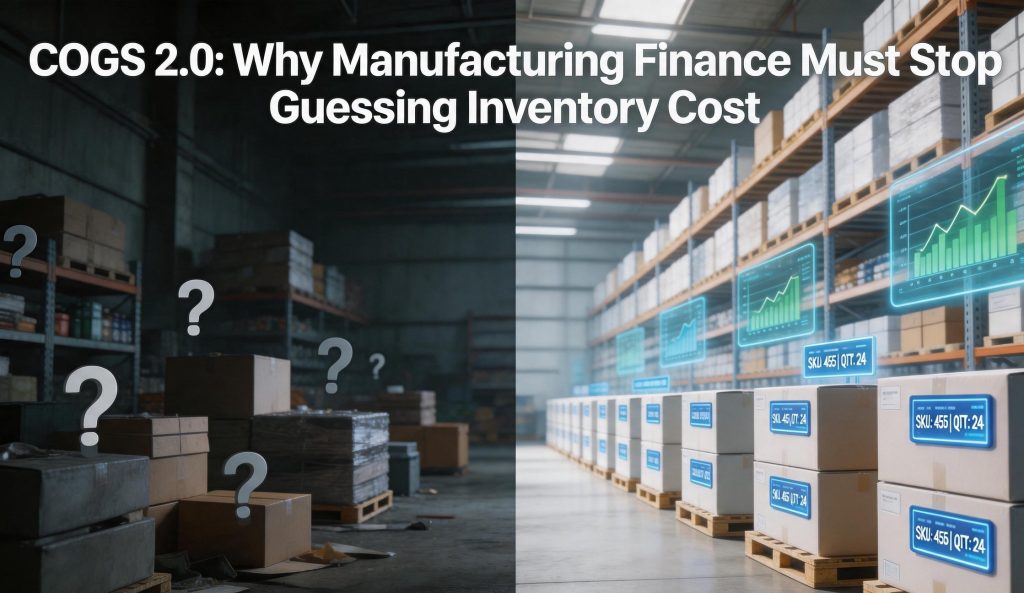
For many manufacturers, cost visibility still operates at a very high level.
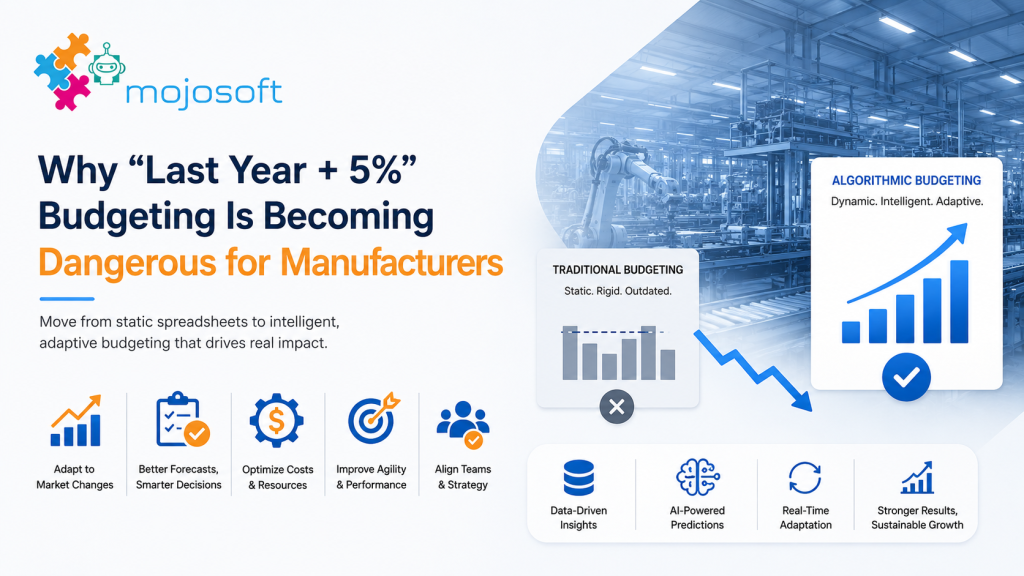
At month end, finance teams look at the electricity bill, payroll, production output, and overall machine utilization. Then they allocate those costs across products using averages. It is a familiar method. It is also increasingly inadequate.
In today’s environment of tighter margins, rising energy prices, labor constraints, and stronger competitive pressure, averages can hide serious profitability problems. A factory may appear efficient overall while certain products, batches, or production runs quietly destroy margin.
This is where AI and Industrial IoT are starting to change the conversation.
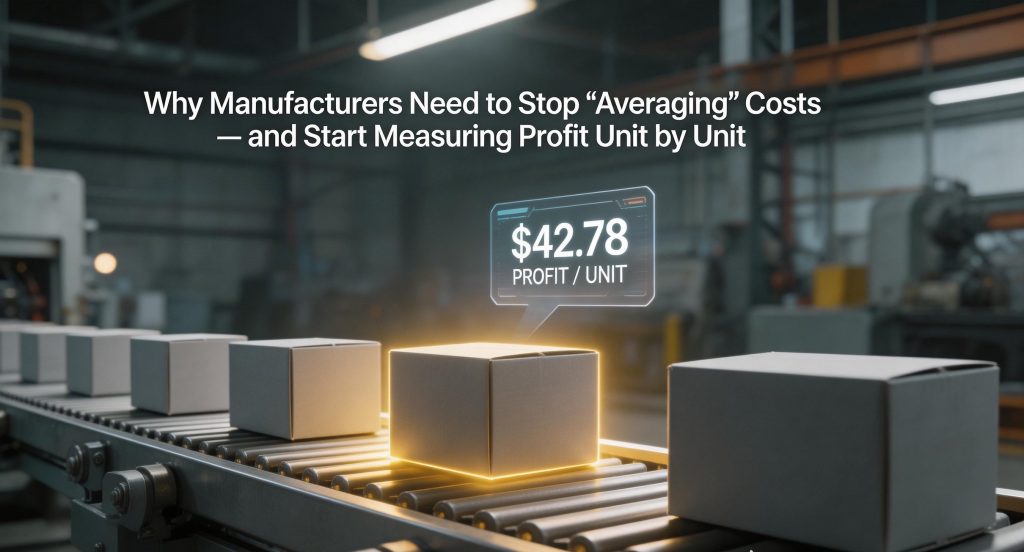
The next generation of manufacturing leaders will not be satisfied with knowing average cost per product family. They will want to know the actual cost of producing a specific unit, on a specific machine, during a specific shift, under specific operating conditions.
That level of visibility changes everything.
The problem with traditional costing
Most factories still treat electricity and labor as broad overheads.
Electricity is usually assigned as part of the overall plant cost, even though not every machine consumes energy in the same way. Labor is often modeled using standard times and standard efficiency assumptions, even though real production conditions are rarely standard.
As a result, management may believe a product is profitable when it is actually being subsidized by stronger-performing lines or more efficient runs.
This creates three major blind spots.
First, it hides inefficiencies at machine level. A machine with deteriorating performance may consume more energy per unit without being noticed quickly.
Second, it masks labor variability. Two operators, stations, or shifts may produce the same output with very different effort, quality levels, and rework implications.
Third, it weakens decision-making. Product pricing, customer negotiations, engineering improvements, and operational planning are all less effective when based on blended assumptions instead of actual cost behavior.
From average costing to unit-level profitability

AI gives manufacturers a way to move from estimation to precision.
With the right sensor data, production data, and analytics layer, manufacturers can begin to calculate the actual electricity usage and labor effort associated with a specific unit or batch.
This does not simply improve reporting. It creates a new management capability.
Instead of asking, “What is our average cost this month?” leaders can ask:
- Which product variants consume disproportionately high energy?
- Which shifts or stations are causing labor cost spikes?
- Which customers or order types are less profitable than we thought?
- Which design changes would reduce production cost most effectively?
- Where is margin leaking in real time?
Those are far more strategic questions.
Electricity is no longer just overhead
In many industrial environments, energy is one of the largest costs after raw materials. Yet in practice, it is often treated as a shared burden rather than a measurable production input.
That approach made sense when measurement was difficult and expensive. It makes less sense now.
By using sub-metering, machine-level monitoring, and AI-based pattern analysis, manufacturers can begin to understand how much energy is consumed by a particular machine, process step, or production cycle.
This has important implications.
A unit produced on Machine A may cost more than the same unit produced on Machine B, simply because Machine A is operating inefficiently. A heating system, motor, or pump may be drawing excess power long before the issue becomes obvious through maintenance failures. Without granular visibility, that cost disappears into the total utility bill.
With better visibility, management can identify energy-intensive products, compare machine performance more accurately, and even shift certain production activities to lower-tariff time windows when appropriate.
In other words, energy management becomes a margin management tool.
Labor can also be measured more intelligently
Labor costing has long relied on standard man-hours and theoretical cycle times. But every factory leader knows reality is more complex.
Workers do not perform identically. Workstations are not equally efficient. Fatigue, ergonomics, tool condition, supervision quality, and process design all influence actual labor effort.
AI can help manufacturers understand this variation much more clearly.
Using computer vision, workstation analytics, wearable devices, or other production tracking methods, manufacturers can estimate actual touch time, identify bottlenecks, and understand where labor content rises unexpectedly.
This should not be seen as a policing mechanism. Used properly, it is a management tool for improving process quality, training effectiveness, ergonomics, and overall productivity.
It can also reveal an important truth that averages often miss: the fastest operator is not always the most profitable one. A worker who takes slightly longer but produces fewer defects and less rework may contribute more margin overall.
That is the kind of insight leadership teams need.
The rise of the financial digital twin
The real breakthrough happens when energy data, labor data, machine condition, material usage, and production history are brought together into a single digital profile for each unit or batch.
This creates what we might call a financial digital twin.
Imagine being able to view a product not just by its sales value, but by its true cost history:
- actual raw material cost at time of issue
- exact machine energy consumed during production
- actual labor effort applied
- quality inspection time
- machine wear impact during the run
- deviation from standard cost
- real margin at unit level
That is far more powerful than a traditional costing report produced weeks after the fact.
It gives management the ability to move from hindsight to immediate oversight.
If actual production cost starts drifting above target cost during a shift, the business does not need to wait until month end to discover the problem. Supervisors and managers can intervene while there is still time to protect margin.
Why this matters to management
This is not just an operational improvement. It is a strategic one.
For CFOs, it means more accurate profitability analysis. Products, customers, and order patterns that were once assumed to be profitable can be evaluated with much greater confidence.
For COOs and plant leaders, it means better control over performance drivers at machine, shift, and operator level.
For engineering teams, it means design decisions can be assessed not only for manufacturability, but for financial manufacturability. A small change that reduces cycle time, energy usage, or rework can be quantified much more clearly.
For sales leadership, it strengthens pricing discipline. When a customer pushes for a discount, the company can respond with facts rather than assumptions. It knows where its margin floor is, and it can negotiate from a position of knowledge.
That is real commercial power.
The strategic shift ahead
Manufacturing is entering a new phase. The factories that win will not only be the ones that automate more. They will be the ones that understand their economics more precisely than competitors.
The era of relying on averages is coming to an end.
AI and Industrial IoT now make it possible to understand cost at a much more granular level. That does not mean every company needs to transform overnight. But it does mean leadership teams should start thinking differently about what operational visibility should look like in the years ahead.
The question is no longer whether this level of insight is useful.
The real question is how long a manufacturer can afford to operate without it.
Final thought
The future of manufacturing is not only about producing faster or cheaper.
It is about knowing, with confidence, what each product truly costs to make, why that cost changes, and what management can do about it in real time.
The companies that develop this capability will not just improve reporting.
They will make better decisions, protect margin more effectively, and compete with greater precision.